
by Molly Rausch L1 Certified Personal Trainer and Certified Athletic Trainer
Hello everyone! This week’s “Fitness Tip of the Week” is about foam rolling. A lot of people are familiar with what foam rolling is in general, or at least, what a foam roller is. The technical term for foam rolling is called “self myofascial release.” Every skeletal muscle you have is covered in tissue called fascia. Fascia helps separate and support the muscles. Sometimes, scar tissue or adhesions can form between the fascia and the muscle, which limit movement and cause flexibility decreases. Foam rolling helps break up the adhesions and scar tissue, aka “release” the fascia from the muscle.
Now, there are a TON of foam rollers out there. Some work better on different areas of the body. Some are more padded for tender areas. Some even vibrate to help loosen up those tight muscles! The best thing to remember when selecting a foam roller to use is what is manageable for you. Foam rolling should not be so painful that you can hardly get through it without a tear to your eye. It may not be comfortable, but it shouldn’t be excruciating.

Why:
I have touched on this a little bit already, but the whole reason for foam rolling is to help improve the quality of movement by improving flexibility. Stretching is great to help you move better, but imagine the improvements you could make by foam rolling along with stretching? You first break up all the scar tissue/adhesions to release your fascia from the muscle and then you stretch it out to really help improve your flexibility. Just like you should have a well-rounded training program, you should also have a well-rounded recovery/self-care routine.
When:
There is a lot of research and discussion on when is the BEST time to use the foam roller. People have looked at if it’s better before or after workouts and if you should stretch before or after, but it gets a lot of mixed results. People have found improvements on all arguments. You could really drive yourself crazy trying to pick a BEST time. Ultimately, the best thing is to just do it regularly. Foam rolling once here and there, no matter when you do it in respect to your workout or stretching, is not going to help give you the tissue changes to help improve flexibility and movement. If you are working your muscles regularly, they will be breaking down and rebuilding adding more adhesions between the fascia and muscle. If you use your muscles, you should also give them some love.
How:
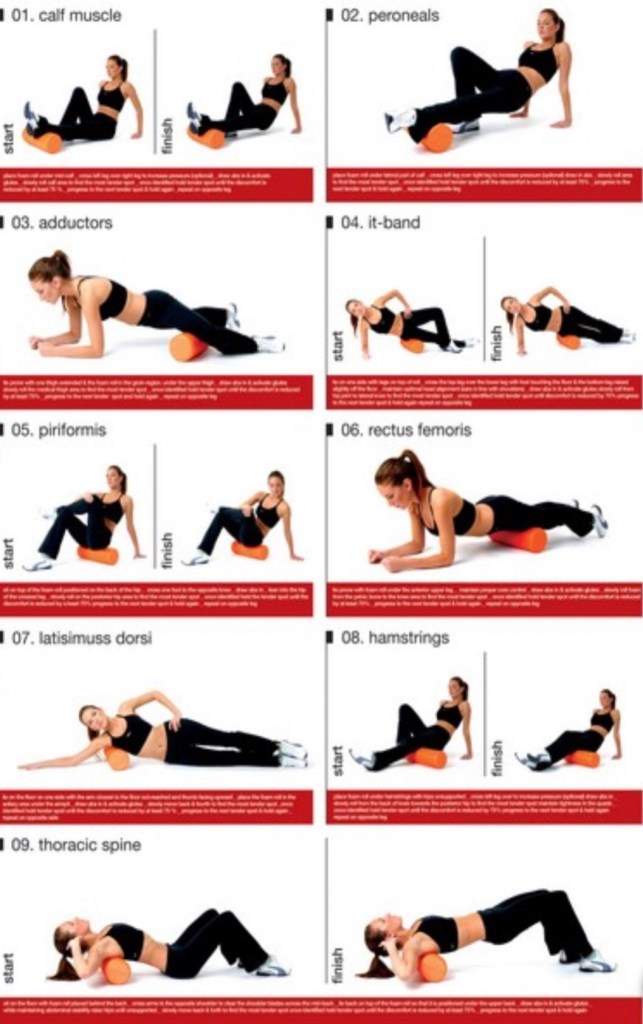
You can roll out pretty much every skeletal muscle you have, if you have the right roller. Again, what is right for you and a certain muscle group may not be the same for another. When foam rolling, give it enough time. Just like stretching, don’t rush through foam rolling. Give each muscle group a minute or so. Roll all the way up and down the muscle. Remember to breathe through it and keep muscles as relaxed as possible. If you find a spot in the muscle that is a little extra tender, keep the foam roller on that spot for a couple seconds. I have attached a document on the next page that has examples on how to roll out different body regions.
If you have any questions on this topic, please feel free to contact me at mrausch@healthworksfitness.com or comment below!
 Molly’s Fitness Tip of the Week
I always wondered why people used foam rollers. I assumed it was always about recovering from injury. Now I know better!
LikeLiked by 1 person
That’s a very common misconception. Usually, people are first shown foam rolling when they are having issues. The funny irony is using foam rollers more often may have prevented the issue from ever occurring.
LikeLiked by 1 person
Foam rollers are the absolute best! Great post! we followed you to keep up with your content, The DyeHard Team.
LikeLike