Heart Health

by Molly Magunga, MS ATC, CPT, CES

Hello everyone! February is a month known for many things. It’s a month for love. A month for Black History Awareness. It is also American Heart Month, a month to focus on cardiovascular health. According to the World Health Organization, heart disease is the leading cause of deaths globally. Heart disease deaths have also seen the biggest increase in the last 19 years, compared to any of the other top 10 causes of deaths worldwide. The saddest reality of heart disease is that many of these deaths are preventable. This reality does have a bright side. There is a lot of information out there to help you make positive changes to reduce your risk of heart disease. What better way to start off a new year and a new month than with tips to help you improve your cardiovascular health?

Heart Health Tips

There are a lot a things you can do to help take care of your heart. When looking at the full list, it may seem like a daunting feat to make all the necessary changes to help your heart. The big thing to remember is to use every day to make small changes. No day will be perfect, but the key is to consistently try for improvement.

  • Healthy and Balanced Diet
    • A good, heart-healthy diet includes eating foods low in unhealthy or saturated fats, sodium, and added sugar. A variety of fruits, vegetables, and whole grains gives your body much needed nutrients to manage weight and help prevent heart disease. Some fats are important to a balanced diet. Eating food that contain healthy fat (monounsaturated or polyunsaturated fats), like avocados, nuts, and seeds, in place of unhealthy fats will give the body what it needs without being tough on the heart. Incorporating more fish that are high in omege-3 fatty acids can also help reduce triglycerides or blood fats and help improve the health of your cardiovascular system.
  • Maintaining a Healthy Weight
    • Carrying extra weight, especially around your midsection, has been shown to increase the risk of developing heart disease. Knowing your hip-to-waist ratio (dividing your waist circumference by your hip circumference) is one way to know if you are someone in this category. If you are, don’t panic! Diet and exercise can help shed that extra weight and reduce your risk.
  • Stop Smoking
    • The negative effects of smoking have been research over and over again. Smoking causes damage to the cardiovascular system and can lead to some very, very serious health problems. It’s not easy to quit, but never give up. Keep trying as long as you need to succeed and seek help if you need it! There are tools and support out there, so use them to help you.
  • Get Regular Doctor Checkups
    • Getting regular physical exams help detect any possible concerns earlier. Things like blood pressure and cholesterol can be monitored more closely to determine your risk of heart disease. If you have a moderate or high risk, you and your doctor can develop a plan earlier to help reduce it. Prevention is always easier than treatment.
  • Manage Stress
    • It’s impossible to reduce all stress to the body. Reducing what stress you can and learning to manage the rest will help your body in so many ways, including improving your heart health. Yoga, meditation, knitting, or social interactions can all help manage stress. Try a variety of things to find what works best for you.
  • Regular Exercise
    • Moving regularly through exercise can also help reduce your risk of heart disease by helping to control blood pressure, cholesterol, and weight. The American Heart Association recommends getting 150 minutes per week of moderate-intensity aerobic exercise or 75 minutes per week of vigorous aerobic exercise for major heart health benefits. It is best to spread these minutes throughout your week, but this can still be done in many different ways. When looking at moderate-intensity workouts, going for a brisk, 30-minute walk five times a week or biking for 50 minutes three times a week are both examples of getting the recommended exercise throughout the week for major heart health benefits.

If you have any questions on this topic, please feel free to email me at mmagunga@healthworksfitness.com or comment below!

Body Types

by Molly Magunga, MS ATC, CPT, CES

Hello everyone! This week’s “Fitness Tip of the Week” is about different body types. You don’t need to look at the person that comes into the gym every day or the people walking down the street, to realize that every person’s body is different. In fact, a lot of us get very caught up in the comparison of different people’s bodies. It’s not a bad thing to compare body types; AS LONG AS, it’s not done in a negative manner. It is far too easy to get stuck in a negative thought cycle by thinking: “Why aren’t my hips like hers?” “Why is she able to lose weight so much quicker than Me?” “I wish my body was more like his!” 

The thing to remember is that your body IS different than other people and that’s not a bad thing! Instead of trying to morph your body into a different body type, the best tip I can give you is for you to learn about your body so you can use it at its full potential! Your body type explains how you respond to exercise, how easily you put on muscle, and if you tend to store fat more easily. There is no bad body type! Knowing your body type is just a tool to help you accomplish your fitness goals. You may even have a good idea of your body type, but the more you know the better for designing a program to reach your fitness goals. 

Body Type Breakdown

There are three main body type categories, which I will breakdown below. Before getting into it, I wanted to make one disclaimer: people are all unique, so the reality of these categories is that most people are a combination of the three. My tip to you would be to read through the categories and take notes about what sounds like you. You can then use those notes to help you succeed with your fitness goals.

Ectomorph:

An ectomorph is a body type that is long and lean. Ectomorphs tend to have long limbs with shoulders that are thin and a smaller width. They also tend to have a hard time putting on muscle. If increasing muscle mass is a goal of an ectomorph, a standard weight training program that focuses on lifting heavy weights is critical to achieve that. Due to the naturally lean frame, increasing calorie intake will be crucial so an ectomorph is able to gain muscle and maintain it. 

Endomorph:

The opposite of an ectomorph would be the endomorph. A person with an endomorph body type has a larger frame. They tend to put on muscle and fat very easily. This body type generally stores fat pretty easily. A common fitness goal for people with an endomorph body type is weight loss or decreasing body fat percentage. To achieve this goal, the exercise program should include a combination of cardio and weight training. You want to burn a lot of calories with your workouts. Diet is very important for weight loss as well, which is why being mindful of what is ingested is important. 

Mesomorph:

Mesomorph is the ”in-between” body type. People with this build are able to put on muscle, but also have a faster metabolism. It’s a very athletic build. They can gain or lose weight pretty easily and are naturally very strong. They are able to burn fat without losing muscle. Because this body type respond quickly to training, diet and exercise plans will vary depending on individual fitness goals. If you are a mesomorph and consume a high calorie diet with minimal activity, you’re likely to gain weight easily. Luckily, if you adjust, your body will also quickly adjust. 

If you have any questions on this topic, please feel free to email me at mmagunga@healthworksfitness.com or comment below!

Tips on Setting a Fitness Goal

by Molly Magunga, MS ATC, CPT, CES

Hello everyone! This week’s “Fitness Tip of the Week” is about setting a fitness goal. I have posted in previous weeks about the importance of incorporating in different techniques or equipment to help you be successful in reaching your fitness goals. That’s still very important, but what about helping you from square one? What if you don’t really have a concrete fitness goal? My goal (see what I did there?) this week is to help guide you in deciding on a fitness goal. 

Knowing what you are working towards AND having a plan to get there is how to stay on track and keep your motivation high. Not having a fitness goal is like walking into the supermarket without knowing what you want for supper. You know everything you need is in that building. If you wander around without a recipe and list, there is a chance you end up with everything but a complete meal. You may get lucky with enough variety to make supper, but it may not be as good as you hoped. Maybe you find yourself grabbing the same ingredients over and over again and make the same supper you have had a million times. These are all examples of going to the gym without a plan and a goal. You may not be getting a well-rounded routine, it may take you longer to see the progress you want, or you could end up plateauing because you keep doing the same exercises day after day.

Tips to Making S.M.A.R.T. Goals: 

Starting is always the hardest step. One tool to make deciding on a fitness goal easier is using the mnemonic device S.M.A.R.T. Any goal, fitness or otherwise, should be specific, measurable, acceptable/ attainable, realistic, and time-sensitive. So let’s break each one of these down.

Specific: When setting a fitness goal, the more specific the better. Goals like increasing strength or improving health are good goals, but they aren’t very specific. What specifically do you want to improve? What does improving health mean to you? Do you want increased strength in a certain muscle group? Adjectives are important when it comes to setting goals. 

Measureable: You need to be able to measure the goal you decide on, so you are able to determine if you have reached a goal. Maybe you want to increase upper body strength by benching 20% more than you can now. You can make that goal measurable by doing a one-rep max at the bench when you start, then retest when you progress through your program. A little math would determine if you met that goal. 

Acceptable/Attainable: The goal needs to be achievable with your resources. Goals are there to help you succeed. Goals should be challenging to reach, but never impossible to get to. Especially for weight loss, knowing a healthy way to progress to different goals makes them attainable. Trying to lose too much weight too quickly is very bad for your health. You can’t set a goal, wake up the next day, and suddenly be at your goal. 

Realistic: Goals need to be relevant for you and your life. Realistic goals show why you want to accomplish them. Realistic goals are worthwhile. This part in developing your fitness S.M.A.R.T. goal is the fuel that keeps you going.

Time-sensitive: The final part to a S.M.A.R.T. fitness goal is the deadline. It is too easy to coast along if you don’t set a time to accomplish your goal by. If you have an end goal that will take a long time to accomplish, set up smaller goals with closer deadlines to keep you motivated. 

If you have any questions on this topic, please feel free to email me at mmagunga@healthworksfitness.com or comment below!

Tips on Using Battle Ropes

by Molly Magunga, MS ATC, CPT, CES

Hello everyone! This week’s “Fitness Tip of the Week” is about using the battle ropes! This little (or not so little) piece of equipment is a great tool to incorporate into your fitness routine! If you want to mix up your cardio or improve power, this is a great way to do it. Just be advised, if you have not used them, they are heavier than they appear. It is your upper body doing the majority of the movement, so it doesn’t take long to feel the muscles burning and heart rate increasing. Because each arm must work independently, it is also a great tool for keeping muscle balance between your left and right sides! Why is this important? Muscle imbalances causes compensations. Compensations lead to overuse. Overuse leads to tissue breakdown and possible injury. Just like everything in life, balance is everything! 

Tips on Battle Rope Variety:

Although mostly used solely as an upper body exercise, there are a lot of variations to using the battle ropes that incorporate a majority of your muscle groups. What are they you ask? Well, let me tell you:

Standard Waves
Battle Rope Lunges
Battle Rope Plank
Battle Rope Jumping Jacks
Rope Pull
Battle Rope Russian Twists

If you have any questions on this topic, please feel free to contact me at mmagunga@healthworksfitness.com or comment below!

Shovel Your Worries Away

by Molly Magunga, MS ATC, CPT, CES

Hello everyone! This week’s “Fitness Tip of the Week” is about proper shoveling techniques and how to structure your workouts to help prevent shoveling-related injuries. 

It’s that time of year again. There is a chill in the air. The days are still short. We never know if there will be rain or snow. Although a lot of us love the look of the winter wonderland, venturing out in the snow can be a painful task. I mean painful in every sense of the word. If you aren’t using the correct form or you aren’t strong in the right muscles, the risk of injury is higher when you go to shovel. If it’s heavy, wet snow, it poses an even bigger risk of injury if you aren’t ready for it. Back and shoulder pain are the most common shovel related ailment.

It’s not too late to start strength training to help get yourself stronger before the next big storm. Any start to training in preparation is extremely helpful and any start to a program is proper form. Just having proper form will help reduce your risk of injury. 

Proper Shoveling Form:

Before you even go out in the snow, you need to remember that shoveling is a very physical task and a proper warm up is necessary. Make sure your legs, arms, and spine are properly stretched and warmed up. 

After the warm up, it’s time to get shoveling. Think of shoveling like deadlifting. In your deadlifting set up with the bar, your grip is nice and wide. It’s the same when you shovel. This helps to control the weight at the ends of the shovel. When you deadlift or clean, you also keep the bar close to your body for the movement. You want to do the same when shoveling. 

The rest of your body is set up exactly like a deadlift as well once it comes time to prepare for a shovel-full of snow. You want to remember to keep a soft bend in your knees, back straight, shoulders pulled down and away from your ears, and core engaged. 

The last form tip to remember when shoveling is how to actually move the snow. When you can, push the snow with the shoveling. It’s a lot better for your body to push it away, then trying to lift it all. When pushing it isn’t possible, you want to pivot your body. Do not twist. 

Tips for Strength Training:

Here are some great exercises to help get you strong for those shoveling day. You want to do 12 to 15 reps of each exercise. Repeat exercises three times. Think about how much you would have to shovel. You need to be able to maintain form for that period, so you should strength train accordingly. 

Squat Chops
Deadlifts
Bent Over Rows
I’s, Y’s, T’s
Lunge Chest Press
Sled Pushes

If you have any questions on this topic, please feel free to email me at mmagunga@healthworksfitness.com or comment below!

Fitness Through the Holidays

by Molly Magunga, MS ATC, NFPT CPT, CES

Hello everyone! This week’s “Fitness Tip of the Week” is about keeping on track during the holidays. It’s a busy time of year for most. Kids are home from school, lots of travel trips planned (and maybe cancelled), and work deadlines before the end of the year are mandated. Routines are all thrown off, which means staying in a fitness groove can be very difficult. You may not be able to physically get into a gym, but there are a lot of little things you can do to have yourself a healthy holiday season.

Healthy Holiday Tips:

The best way to have a healthy holiday season is by starting with a plan. It doesn’t have to be perfect and it’s okay to adapt the plan as you go, but starting with something at least gives you direction during the next couple of weeks. Your plan should incorporate three things: workouts, nutrition, and self-care.

Workouts: Be realistic about what days you can and can’t workout. Plan active activities with family when possible to help supplement. It may be cold, but skiing, snowshoeing, or sledding are all fun things to do that also get you moving. Gosh, even snow-ga is a thing. Seriously, there is yoga outside in the snow that people can do. When you do have time to workout, make them fun so you don’t dread doing it.

Nutrition: The holiday season is a time to enjoy. The big key thing to remember is to listen to your body and don’t overindulge. Don’t deprive yourself, just remember moderation. You can also put a different spin on some of your favorite dishes by making them a little healthier. Tip: skip the sugar on vegetables. Sweet potatoes with some cinnamon on them instead of marshmallows will still be yummy, but much healthier. You also can pack your own snacks for traveling. You can control what you eat and avoid the fast food pit stop. Personally, I road trip with premade, peanut butter and jelly sandwiches. Tip: If you put peanut butter on both slices of bread, the jelly is less likely to make your bread soggy. 

Self-Care: Enjoy your time off. Use it to catch up on sleep, so you feel refreshed coming into the new year. Keep your hydration up. The air is cold and it’s very easy to become dehydrated. Take this time as well to maybe ask for/gift yourself some new workout gear or equipment you have really wanted, but keep putting off.

In a pinch?

I feel like it wouldn’t be a special edition fitness tip, if I didn’t provide you with a fun workout you can do anywhere. Repeat these exercises as many times as you can in 30 minutes

H- High Knees- 30 sec
O- Overhead Press- 12 reps
L- Lunges- 12 reps each
I- Inchworms- 12 reps
D- Diamond Jumps- 30 secs
A- Abs (your choice)- 12 reps
Y- Y Raises- 12 reps
S- Skater Jumps- 30 sec

If you have any questions on this topic, please feel free to contact me at mmagunga@healthworksfitness.com or comment below!

Cold Weather Fitness Tips

by Molly Magunga, MS ATC, CPT, CES

Hello everyone! This week’s “Fitness Tip of the Week” is about cold weather exercise. The holiday season has officially began. I hope you all had a wonderful Thanksgiving  filled with good food, great company, and optimal relaxation. Thanksgiving weekend ended just in time for another snow storm.

With Thanksgiving finished, many are ready to refocus on our fitness goals and grind for the remainder of the year.  I know most of us will try and reduce our cold exposure as much as possible. We will keep our workouts within the warm, safe walls of the indoors. For those of us that are needing fresh air, we must bundle up, brave the elements, and get our workout in outside. There are so many winter activities to keep you active!  With the temperatures dropping and snow accumulating; however, being prepared for the cold weather elements is essential. 

Outdoor Fitness Tips:

When we do desire to mix it up and workout outside, here are some tips to keep you safe and warm. 

  1. Warm up! 
    • Doing a proper warm up is always important, but when you are going out in cold weather, it’s even more necessary. It’s very easy to tighten up when that cold air hits you body. 
  2. Protect your skin
    • Remember:  Lotion, sunscreen, and coverage. Cold air is very dry, so lotion up the skin before and after and cover as much skin as you can during. Also, remember that just because it’s cold, doesn’t mean you don’t still need sunscreen. 
  3. Breathe
    • Cold air can cause you to alter your breathing during exercise. It’s going to feel harder to inhale, so you will want to breathe faster and faster, but that just going to result in hyperventilation. Really concentrate on your breathe to keep is controlled and avoid hyperventilation.
  4. Hydrate
    • Just because it’s cold, doesn’t mean you don’t sweat or need to hydrate your body!
  5. Check for slippery condition
    • I’m not going to say much on this one; except, be careful!
  6. Start going into the wind 
    • Hypothermia is very serious. If you start into the wind, you reduce your wind factor when you are at your sweatiest. This little details can help reduce the risk of hypothermia and keep you a little safer outside. 
  7. Dress with dry, bright colored, layers
    • Below is a great chart to help you layer for different temperature ranges. Pick bright colored outer layers, especially if you are doing your workout early in the morning or later in the afternoon when sunlight isn’t as powerful.

If you have any questions on this topic, please feel free to contact me at mmagunga@healthworksfitness.com or comment below!

Using the Fitbench

by Molly Magunga, MS ATC, CPT, CES

Hello everyone! This week’s “Fitness Tip of the Week” is about using the Fitbench. 

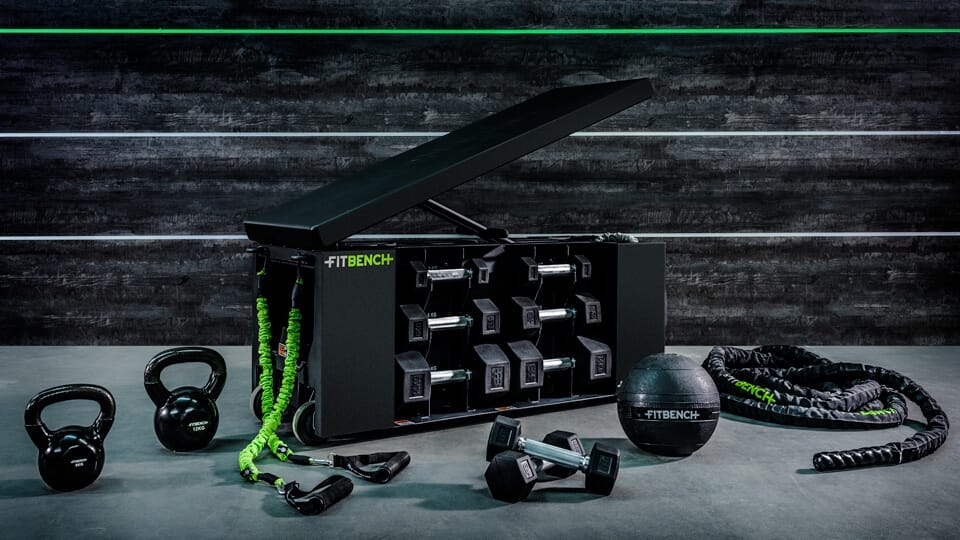
The Fitbench can be a very useful piece of equipment for many different circumstances. Sometimes the gym floor can get very packed and trying to get a full workout in can seem impossible, while trying to maintain safe distances. Cable machines are occupied, there are no places to anchor bands, or finding floor space is unlikely. Other times, you may want to start or expand your home gym and want to utilize space as much as possible. This single bench has a ton of equipment and weights stored in it, so it’s all you need. The Fitbench has a bench top that lifts up for incline exercises and is cushioned for plyometrics. There is storage both within the bench and on its sides. It also has several anchor points for resistance band use. The last, neat feature is that the bench also has wheels and handles for maneuverability. 

Exploring the Bench:

Starting on the long sides of the bench, you have a total of six dumbbell sets, three per side. These dumbbells range in weight from five to thirty pounds. On the front end of the bench, you will find a 25 pound medball, several attachments for resistance bands, and the handle for moving the bench. The back end of the bench is where two kettlebells (20 and 30 pounds) are stored. When you lift the bench top up from the front end, there is a compartment in which 3 different grades of resistance bands are stored. 

Tips on Using Fitbench:

Below is a great full body workout, which utilizes most of the features of the Fitbench. You can do each exercise for reps to focus on strength or do timed intervals to get the heart rate up.

Step Up to Overhead PressBanded Hip Hinge
Incline Chest PressBench Rows with Tricep Kickback
Kettlebell Squats with curlsRussian Twists

If you have any questions on this topic, please feel free to contact me at mmagunga@healthworksfitness.com or comment below!

Fall Workout Tips

By Molly Rausch, MS ATC, CPT, CES

Hello everyone! This week’s “Fitness Tip of the Week” is about fall workout tips. The mornings are getting chilly. The leaves are changing. We know winter is coming, but this doesn’t mean we need to give up all hope for staying active outside. Although we may know of a lot of activities we love to do outside, many of our schedules are so packed this time of year. We spend most of the fall running between events and miss out on time for our workout. Now, we know the best way to be successful is by developing a habit of a fitness routine. Sometimes; however, life requires us to get creative. 

There are definitely the more obvious fall activities that are more physical in nature, which helps multitasking. This time is especially wonderful to go for a hike or bike ride and enjoy the perfect temperature and beautiful scenery. Let’s not forget about going on trail runs either! What do you do if you don’t have time to escape for a hike or run, but you really need to get a workout in? Lucky for you, I found a couple of very clever ideas inspired by some very common fall decor: the pumpkin!

Pumpkin Workout: 

The first workout involved using the letters of the word pumpkin to pick exercises to perform that starts with the same letter. You can do a reps or time. The choice is yours!

P- pushups

U- upright row

M- mountain climbers

P- plank

K- kickbacks 

I- inchworms

N- narrow squat

The second workout is a little more fun, in my opinion. I wish I could take credit for coming up with this, but I can’t. A lot of other people have beaten me to this idea. There are a lot of different workouts with a similar idea, so have fun exploring. When the family is busy carving pumpkins, save yourself a whole one and get that workout in!

https://thefitcookie.com/fun-fall-pumpkin-workout/

If you have any questions on this topic, please feel free to contact me at mmagunga@healthworksfitness.com or comment below!

Pull-Up Form

by Molly Magunga, CPT, BOC ATC, CES

Hello everyone! This week’s “Fitness Tip of the Week” is about the pull-up! Oh, the pull-up! This is one of the hardest strength moves to master. It’s just you fighting against your body weight and gravity, all while keeping your strongest muscles (your leg muscles) out of the equation. It’s a movement you must train on a regular basis to gain and keep the strength. 

Why is this a great exercise and why should you care? Well, it’s the top challenge to test your upper body strength AND one of the few body weight exercises that strengthen your back and biceps. From sports conditioning tests to marine fitness courses, many institutions use the pull-up over other upper body strength tests to determine upper body strength, stability, and functionality. 

Muscles worked:

As I mentioned before, the pull-up is great to strengthen the back and arms. There are many muscles involved in that broad statement though. Specifically in the back, the latissimus dorsi, trapezius, and rhomboid muscles are a critical part in being able to do a pull-up. Your core needs to be strong to stabilize your body. The biceps in your arms need to help pull you up. Lastly, you won’t be able to do a pull-up without grip strength. You have to be able to hold your body weight before you can pull yourself up. 

Proper Form Tips:

The first part in proper form is breaking down the steps of performing a pull-up:

  1. Grip the bar with both hands, shoulder width apart
  2. Hang with arms and elbows fully straight 
  3. Pull yourself up, chin over the bar
  4. Keep your back tight, relax your neck and bring your shoulders away from the ears. Engage your core throughout
  5. Lower yourself slowly and controlled until your arms are fully extended and straight again. 

Common mistakes you need to avoid to be successful in doing a pull-up:

  1. Not using a full range of motion 
  2. Not keeping your elbows in
  3. Not setting your shoulder blades
  4. Not keeping your ribs from flaring 

The big thing with most of these mistakes is not using the main muscles needed to actually do a pull-up. If you don’t pull your chin to the bar or straighten your arms all the way, your arms aren’t working as much. If your ribs flare, you aren’t activating your core. By not setting your shoulders, you reduce  the back muscles ability to help pull you up. 

If you have any questions on this topic, please feel free to contact me at mmagunga@healthworksfitness.com or comment below!