by Molly Magunga, CPT, BOC ATC, CES
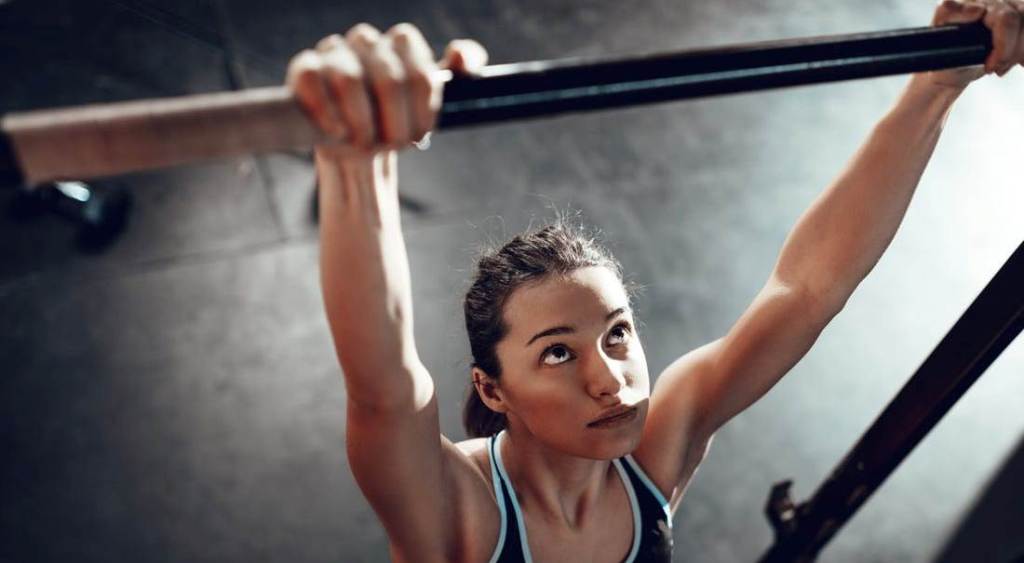
Hello everyone! This week’s “Fitness Tip of the Week” is about the pull-up! Oh, the pull-up! This is one of the hardest strength moves to master. It’s just you fighting against your body weight and gravity, all while keeping your strongest muscles (your leg muscles) out of the equation. It’s a movement you must train on a regular basis to gain and keep the strength.
Why is this a great exercise and why should you care? Well, it’s the top challenge to test your upper body strength AND one of the few body weight exercises that strengthen your back and biceps. From sports conditioning tests to marine fitness courses, many institutions use the pull-up over other upper body strength tests to determine upper body strength, stability, and functionality.
Muscles worked:
As I mentioned before, the pull-up is great to strengthen the back and arms. There are many muscles involved in that broad statement though. Specifically in the back, the latissimus dorsi, trapezius, and rhomboid muscles are a critical part in being able to do a pull-up. Your core needs to be strong to stabilize your body. The biceps in your arms need to help pull you up. Lastly, you won’t be able to do a pull-up without grip strength. You have to be able to hold your body weight before you can pull yourself up.
Proper Form Tips:
The first part in proper form is breaking down the steps of performing a pull-up:
- Grip the bar with both hands, shoulder width apart
- Hang with arms and elbows fully straight
- Pull yourself up, chin over the bar
- Keep your back tight, relax your neck and bring your shoulders away from the ears. Engage your core throughout
- Lower yourself slowly and controlled until your arms are fully extended and straight again.
Common mistakes you need to avoid to be successful in doing a pull-up:
- Not using a full range of motion
- Not keeping your elbows in
- Not setting your shoulder blades
- Not keeping your ribs from flaring
The big thing with most of these mistakes is not using the main muscles needed to actually do a pull-up. If you don’t pull your chin to the bar or straighten your arms all the way, your arms aren’t working as much. If your ribs flare, you aren’t activating your core. By not setting your shoulders, you reduce the back muscles ability to help pull you up.
If you have any questions on this topic, please feel free to contact me at mmagunga@healthworksfitness.com or comment below!
 Molly’s Fitness Tip of the Week