
by Molly Rausch, Certified Personal Trainer and Certified Athletic Trainer
Hello everyone! This week’s “Fitness Tip of the Week” is about the hip hinge. The hip hinge is a movement pattern that involves bending at the hips to flex forward. Unlike the squat; which involves relatively equal knee and hip movement, the hip hinge is a hip dominant move. This is a movement pattern that we natural develop as toddlers as a way of staying balanced while picking items off the floor to avoid back injuries, but as adults lose the ease of the movement. What is the reason for this? Well, a lot of it has to do with sitting so much throughout the day. Our whole posture changes and results in a completely natural movement pattern becoming difficult to perform correctly.
Why is the hip hinge important?
Keeping the body balanced is the key to injury prevention and optimizing performance. Squat and hinge patterns are both very important movements within a strength training program. The squat is a great exercise to strengthen your quadriceps, while the hinge is great for hamstring and glute strength. Most people are already quad dominant, so continuing to only train the squat movement will create more imbalance within your body. This imbalance leads to knee and low back injuries. Creating balance in your lower body is the best way to reduce this injury risk.
Tips on proper hinge form
Perfecting your hinge form first is the critical first step in performing a powerful deadlift or kettlebell swing. If you can’t hinge, you can’t do these exercises effectively. Here are some tips in how to do a correct hinge:
- Maintain a neutral spine
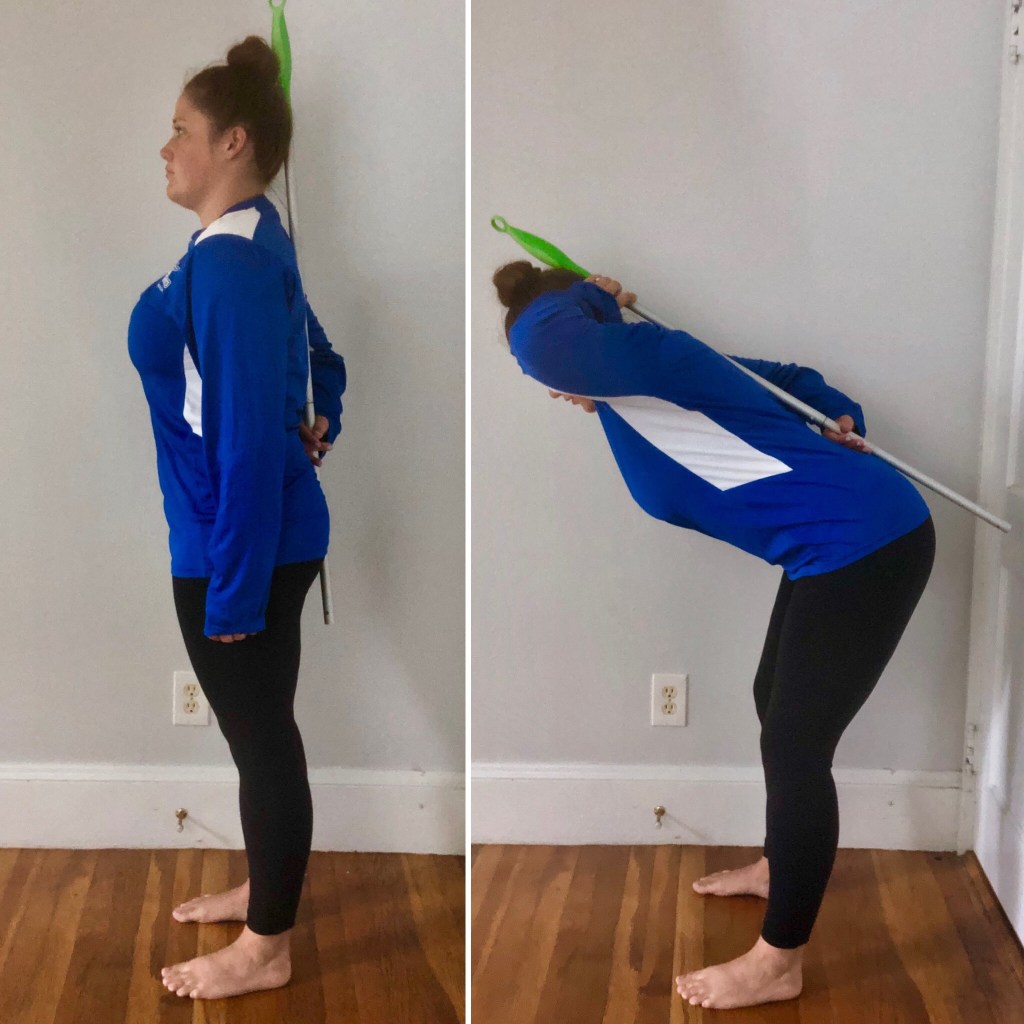
○ Start by holding a dowel along your spine. Your head, back, and butt should all be touching the dowel. - Bend at the hips
○ Keeping the three contact points along the dowel, bend forward from your hips. Make sure to have a soft or slight bend in your knees. - Shift weight backwards
○ As you are bending forward, your hips should move backwards. Stand with your back towards a wall, about a foot or so away. As you bend forward, reach your hips back to touch the wall. - Shoulders back
○ Once you remove the dowel, set your shoulder blades back together and away from your ears. This will help with bracing while lifting weights. - Core engaged (always)
If you have any questions on this topic, please feel free to contact me at mrausch@healthworksfitness.com or comment below!
 Molly’s Fitness Tip of the Week